
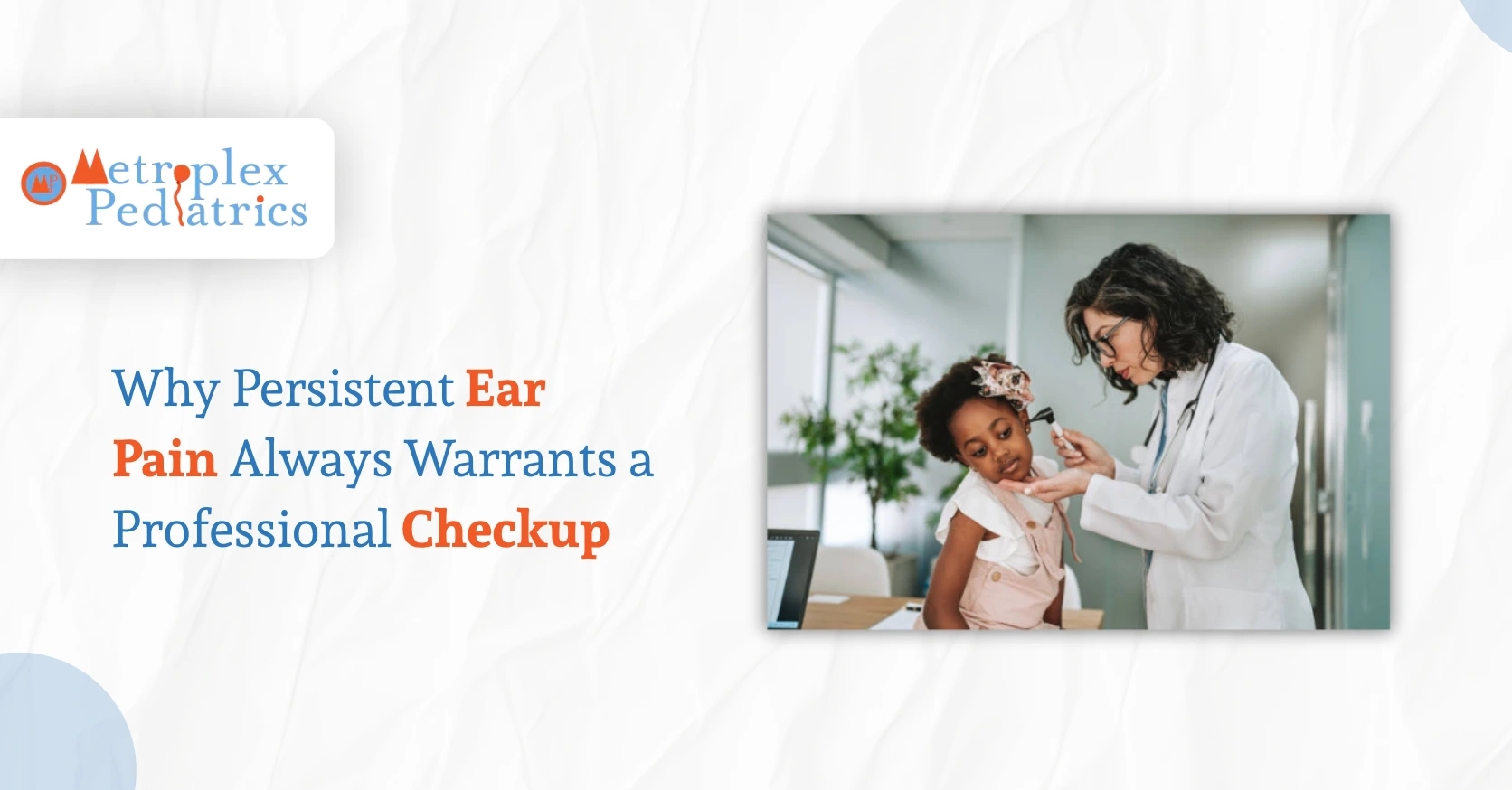
Your kid was totally fine at lunch. By bedtime, they’re crying and grabbing their ear.
Sound familiar?
Most earaches do fade on their own. But the ones that stick around – or keep coming back — need more than a wait-and-see approach.
Ear pain is a symptom! It’s not a diagnosis. And the list of things that can cause it is longer than most parents realize.
Children Aren’t Great at Describing Pain
Babies can’t tell you which ear hurts or what it feels like. Toddlers point at their head, their cheek, or nowhere specific at all.
Older kids can be just as confusing. Some describe ear pain as a headache. Some say their stomach hurts. Teens often stay quiet about it entirely because they don’t want to sit out a practice or miss time with friends.
Parents end up piecing things together. A baby who won’t settle at night. A toddler batting at the side of their head. An eight-year-old asking you to repeat yourself more than usual.
That’s exactly the kind of detective work your pediatrician is trained for. We look in the ear, check the surrounding areas, and connect the dots.
Why Kids Get More Ear Problems Than Adults
There’s a small passage that connects the middle ear to the back of the throat. It’s called the eustachian tube, and it handles drainage and pressure regulation.
In young children, this tube is shorter and flatter than in adults. It gets blocked easily. When that happens, fluid pools behind the eardrum. Pressure builds. Things start to hurt.
The ear also shares nerve pathways with the jaw, teeth, and throat. So pain that starts somewhere else can show up as ear pain — which is a big reason the ear isn’t always the actual problem.
What Could Actually Be Going On
Middle ear infection – This is the most common cause in kids, and it usually follows a cold by a few days. Fluid behind the eardrum gets infected. Your child may have a fever, resist lying flat, sleep poorly, or have fluid draining from the ear. Some infections clear without antibiotics. Others don’t. There’s no way to know without looking.
Swimmer’s ear – Water stuck in the ear canal breaks down the skin and lets bacteria take hold. Very common here in North Texas, especially in summer. A good sign it’s swimmer’s ear: the outer ear hurts when you gently tug on it. The canal may also itch or swell.
Pressure from colds and allergies – A stuffed-up nose can block the eustachian tube and create pressure that hurts. Allergies are a huge trigger in this area – cedar, ragweed, grass pollen. If your child’s ear complaints follow a seasonal pattern, tell us that. It matters. Short flights or elevation changes can cause the same thing temporarily.
Wax buildup – Earwax is supposed to be there! The problem comes when cotton swabs push it deeper instead of clearing it out. A plugged sensation, muffled hearing or mild discomfort can all point to impacted wax. Don’t try to dig it out at home. You’ll likely make it worse.
Sore throat – Strep, tonsillitis, or even a regular viral throat infection can cause pain that radiates to the ear. Your child may be completely convinced it’s their ear. The real source could be further back.
Teething – Babies rub their ears and cheeks when molars are coming in because the nearby nerves share the same area. Teething does not cause high fever, though. If there’s fever and the ear rubbing isn’t stopping – we need to rule out an infection.
Dental issues – A cavity, an abscess or a wisdom tooth working its way in can all send pain signals toward the ear. It might flare with cold drinks or sweets, or come and go unpredictably. If the ear looks fine on exam, the dentist may be the next stop.
Jaw pain – The jaw joint sits directly in front of the ear. When it’s irritated – from grinding at night, clenching during stress, a sports injury, or orthodontic changes – the pain lands right in the ear. Older kids and teens are more likely to experience this. Chewing and yawning make it worse.
Something stuck in the ear – Toddlers are explorers. Beads, food, bits of crayon, small toy parts – all of these end up in ears more often than you’d think. Watch for pain on one side, reduced hearing, or an unusual smell. Do not use tweezers. If you think it might be a button battery, go to the ER immediately. Those cause serious damage fast.
Why You Shouldn’t Just Keep Waiting
One extra day turns into three. Nobody’s sleeping. Everyone’s worn out.
Disrupted sleep affects mood, focus, and appetite – for your child and for you. A kid who’s missing things in class because of muffled hearing might get flagged for attention issues when the real problem is fluid sitting behind their eardrum.
There’s also the treatment issue. Antibiotics can knock out a bacterial infection. They won’t do anything for impacted wax, a sore jaw, seasonal allergies, or a pebble your kid put in their ear. Getting the right diagnosis means getting the right treatment – which means fewer unnecessary medications and faster relief.
When to Call and Book a Visit
Reach out to us if your child has:
- Ear pain lasting more than two or three days
- Pain that gets better and then comes back
- Fever paired with ear pain
- Fluid or discharge coming from the ear
- Muffled hearing, or not responding when you call their name
- Pain when chewing, yawning, or opening their mouth
- Several ear infections within a few months
- New balance problems or unusual dizziness
And trust yourself. If something feels off, don’t wait to call.
When It’s Urgent
If you experience any of these symptoms, go to the emergency room:
- Your baby is less than 3 months of age and has a fever of 100.4°F or higher.
- A button battery could have been inserted into the ear.
- The back of the ear is red, swollen, or painful – or the ear appears pushed forward.
- Your child is unable to move the back of their head, neck or has a severe headache or is difficult to wake up.
- A side face droops or is weak
- Are extremely dizzy or cannot walk steadily
This is a rare event. Once you are aware of the symptoms, you will not hesitate to seek treatment should you encounter them.
Helping Your Child Feel Better in the Meantime
- Take acetaminophen or ibuprofen to relieve pain until the appointment
- Do not use the dosage based on the child’s age
- Use the dosage based on the child’s weight
- Ibuprofen is not safe for babies under 6 months – call us if you are not sure!
Washing cloth can be soothing if applied to the ear. Older children could also benefit from an extra pillow to get their head just a bit higher.
Don’t use cotton swabs. Don’t use ear candles. If there is any discharge, it may be a small eardrum tear and don’t use ear drops unless instructed to.
What the Visit Actually Looks Like
Ear visits typically last less than a minute. The exam itself doesn’t hurt.
When did the pain start, if it is in one or both ears and if there has been any recent illness, swimming or travel. Some notes in your cell phone can help.
Next, we examine the ear canal and eardrum with a small handheld light (otoscope). Children will be better off sitting on a parent’s lap. Typically a gentle hold is enough.
We can examine the movement of the eardrum to determine if there is fluid behind the eardrum. When the ear appears clear, we don’t stop there. We also examine the throat, neck, jaw and teeth.
With an understanding of what is happening we will take you through it in layman’s terms – no jargon. Further treatment may involve observation and waiting, antibiotics, ear drops, ear wax removal, allergy treatment, or referral to a different specialist.
You will be able to identify the symptoms, and when to return.
Come See Us at Metroplex Pediatrics
Ear pain is fixable. You just need to know what’s causing it first.
We see kids from newborn through age 18 here in North Richland Hills, and we take the time to actually figure out what’s going on – not just hand over a prescription and send you home.
Call us at (817) 922-0800 or book online. We’re at 6905 Davis Blvd, Suite 200, North Richland Hills, TX 76182.




No comment