
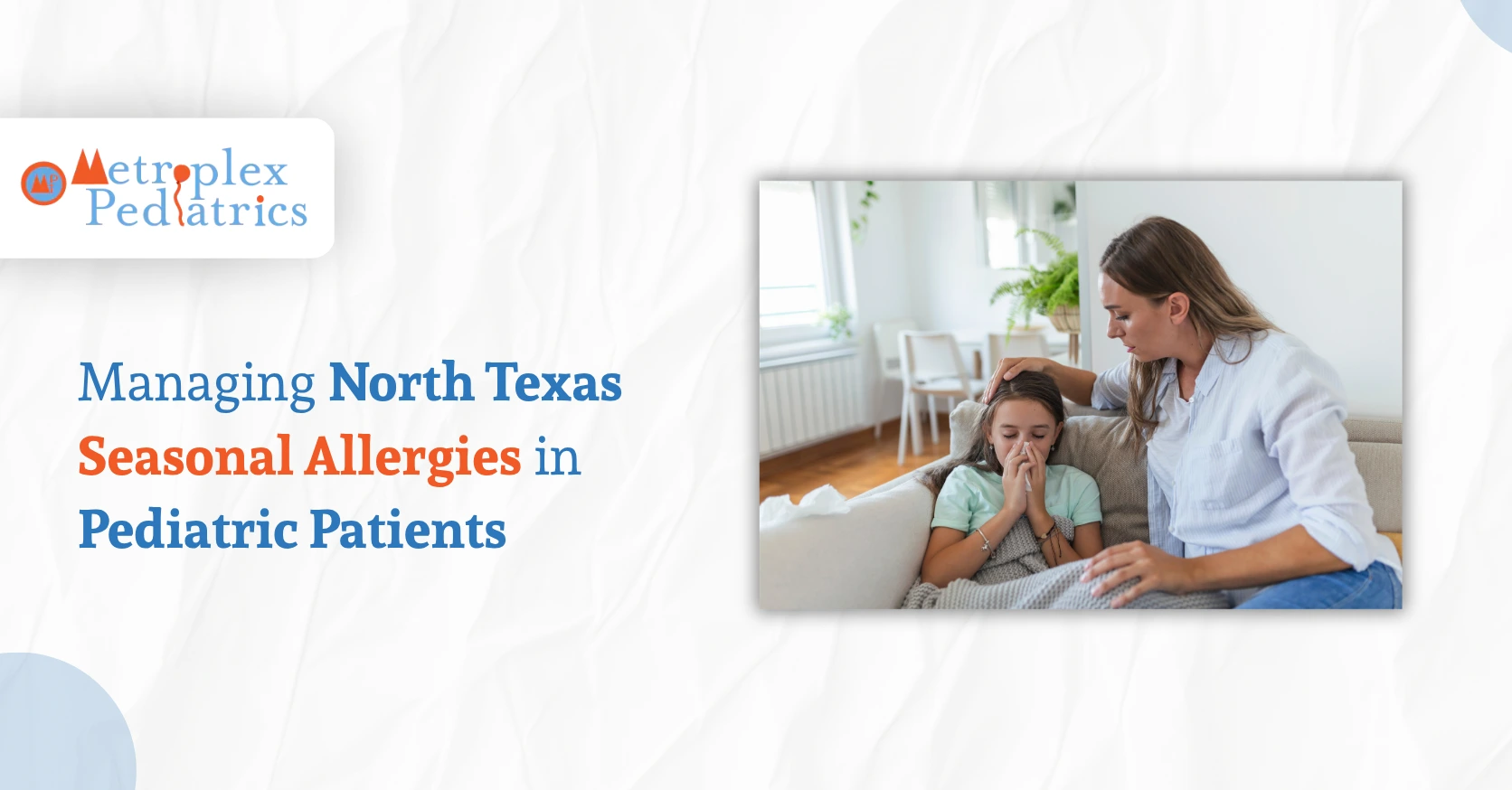
North Texas has pollen almost all year – so many kids deal with allergies in every season. To manage them, learn your child’s triggers, limit pollen at home, and use medications as your pediatrician advises.
Call the doctor if symptoms last more than a couple of weeks, disrupt sleep, or include wheezing.
Your kid sneezes through spring. Then fall hits, and the sneezing starts all over. By winter, you’re not sure if it’s a cold, allergies, or both.
Welcome to North Texas.
It’s one of the toughest places in the country for allergy sufferers. So if your child’s nose is always running, you’re far from alone.
This guide covers what’s causing it, how to tell it from a cold, what actually helps, and when to call us.
What we’ll cover:
- Why North Texas is so rough on allergies
- The pollen calendar, season by season
- Allergy or cold? How to tell
- What to do at home
- Medications, in plain language
- When to see a doctor
- Questions parents ask us
Why Are Allergies So Bad in North Texas?
A few reasons stack up.
Texas sits in what’s often called the “pollen belt.” We’ve got lots of trees, grass, and weeds. Our mild winters mean plants start early and finish late. And wind carries pollen for miles, so removing a tree from your yard won’t fix much.
Dallas shows up on the Asthma and Allergy Foundation of America’s list of the toughest U.S. cities for allergies, year after year. In 2023, it ranked second.
So when your pediatrician says “allergies,” they usually mean there’s a lot to react to.
What Is the North Texas Allergy Calendar?
Here’s a rough guide to what’s in the air and when. Timing shifts from year to year with weather.
| Season | Main trigger | What to know |
| December to February | Mountain cedar | Often called “cedar fever” or “the Christmas allergy.” Counts are higher on sunny, windy days |
| February to June | Tree pollen (elm, oak, ash, pecan, hickory, pine, and more) | Peak spring misery |
| March to September | Grass pollen | Often peaks in summer |
| July through late summer | Mold | Worse in warm, humid weather. It’s around all year |
| August to November | Ragweed | Can last up to four months in Texas |
Notice anything? There’s hardly a gap. That’s why your child’s symptoms might seem to never go away.
(Source: Children’s Health, Dallas named one of the worst cities for allergies)
What Are Seasonal Allergies in Kids?
Seasonal allergies, also called allergic rhinitis or hay fever, happen when the immune system overreacts to something harmless in the air, like pollen or mold.
Your child’s body treats it like an invader. That sets off the sneezing, the itching, and the runny nose.
When Do Allergies Start?
Usually after age 2 or 3. Kids typically need a few seasons of exposure first. Babies and toddlers under 2 are more likely to react to indoor allergens like dust mites or pets.
So if your 6-month-old has a runny nose in April, it’s more likely a cold.
What Are the Signs of Seasonal Allergies in Kids?
Look for:
- Sneezing, sometimes in long runs
- A runny or stuffy nose
- Itchy, watery, or red eyes
- An itchy nose, throat, or ears
- Rubbing the nose upward (the “allergic salute”)
- Cough or post-nasal drip
- Dark circles under the eyes
- Mouth breathing, snoring, or restless sleep
- Being tired or cranky
Sleep is a big one. Kids with stuffy noses often sleep badly. Then they’re tired, moody, and have trouble focusing at school.
Is It a Cold or Allergies?
It’s a common mix-up. This chart helps:
| Cold | Allergies | |
| How long | Usually 7 to 10 days | Lasts weeks, or comes back each season |
| Fever | Sometimes | No |
| Itchy eyes or nose | Rarely | Often |
| Mucus | May turn thick or colored | Usually clear and watery |
| Sneezing | Some | A lot, in runs |
| Body aches | Sometimes | No |
| Pattern | Random | Same time each year, or after being outside |
A symptom log helps. Jot down what you see, when it happens, and what your child was doing. We love seeing these at visits.
How Can I Help My Child at Home?
You can’t remove pollen from North Texas. But you can turn it down.
Outside
- Check the pollen forecast in a weather app before outdoor play
- Plan play for after a rain, when counts are often lower
- Limit outside time on dry, windy days
- Have kids wear sunglasses to keep pollen out of their eyes
- Rinse off after heavy outdoor play, especially mowing or yard work
When You Come Inside
- Shoes off at the door
- Change clothes
- Wash hands and face
- Give a bath or shower before bed, and wash their hair
- Wipe down pets that have been out
That bedtime shower matters. Pollen collects in hair, and it ends up on the pillow.
In the House
- Keep windows closed during high-pollen days and run the AC
- Change your AC filters on schedule
- Use a HEPA filter in your child’s bedroom
- Vacuum often, ideally with a HEPA vacuum
- Wash bedding weekly in hot water
- Keep stuffed animals off the bed, or wash them
- Dry laundry in the dryer, not on an outdoor line
- Fix leaks and clean damp spots to cut down on mold
In the Car
- Keep the windows up
- Set the AC to recirculate
A Few Honest Notes
- Humidifiers can help dry nasal passages, but only if you clean them often. A dirty one can grow mold, which makes things worse.
- Saline rinses can help flush pollen out. Use only distilled, boiled and cooled, or sterile water. Never plain tap water.
- Local honey doesn’t have good evidence behind it. And honey is never safe for babies under 1.
- Vitamins and “immune boosters” haven’t been shown to cure allergies. Good sleep, water, and a balanced diet still matter, but they aren’t a fix.
What Medications Help Kids With Allergies?
Always check with your pediatrician before starting anything. The right choice, and the right dose, depend on your child’s age and weight. Here’s a quick overview.
| Type | What it does | Good to know |
| Oral antihistamines | Ease sneezing, itching, and runny nose | Newer ones are once daily and less sleepy. Older ones, like diphenhydramine, can cause drowsiness |
| Nasal steroid sprays | Reduce swelling and congestion | Work best when used daily, not just on bad days. May take days to reach full effect |
| Saline nasal sprays or rinses | Flush out pollen and thin mucus | Safe and gentle. Use safe water |
| Antihistamine eye drops | Calm itchy, watery eyes | Often work better for eyes than pills |
| Decongestants | Shrink swollen nasal tissue | Not for young children, and only for short-term use. Ask first |
A few tips:
- Follow the label and your doctor’s instructions on dosing
- Don’t use adult medications for kids without checking first
- Don’t give a sleepy antihistamine just to help your child sleep
- Start before symptoms hit if you know your child’s season is coming
- Tell us everything your child takes, including supplements
Not working? Don’t keep trying random products. Call us. There are other options.
Can Seasonal Allergies Be Cured?
Not exactly. But they can be managed well and some kids do outgrow them.
For children with moderate to severe allergies, an allergist may talk about allergy testing and immunotherapy. That means allergy shots, and for some allergens, tablets. These can bring longer-lasting relief by helping the body get used to allergens. Shots are typically weekly at first, then monthly for several years.
If your pediatrician thinks it’s worth it, we can refer you to an allergist.
Can Allergies Make Asthma Worse?
Yes. Allergies and asthma often go together. Pollen can trigger coughing, wheezing, and chest tightness in kids with asthma.
If your child has asthma:
- Keep their asthma action plan handy
- Take controller medications as directed
- Keep a rescue inhaler where it’s easy to get
- Watch for increased coughing, especially at night or with exercise
- Share the plan with the school
When Should I Call the Pediatrician?
Call us if:
- Symptoms last more than a couple of weeks and aren’t improving
- Over-the-counter medications aren’t helping
- Your child’s sleep is suffering
- They’re missing school or activities
- Congestion lasts 10 days or more with thick, colored mucus, or you see facial pain or a fever (this could be a sinus infection)
- You see ear pain, or frequent ear infections
- Your child coughs a lot at night or with exercise
- You aren’t sure if it’s allergies or something else
Call 911 or go to the ER for:
- Trouble breathing, or struggling to catch their breath
- Wheezing that doesn’t ease
- Blue or gray lips
- Swelling of the face, lips, or tongue
- A severe allergic reaction, with hives and breathing trouble
How Does Metroplex Pediatrics Help?
At Metroplex Pediatrics, we see kids from newborns through age 18. For allergies, we can help you figure out what’s going on, decide on a plan, check for related issues like asthma, and refer you to an allergist when it’s time.
Take a look at our services, or meet our team.
FAQ
At what age do seasonal allergies start?
Usually after age 2 or 3, after a few seasons of exposure. Younger kids are more likely to react to indoor triggers.
What’s the best allergy medicine for kids?
It depends on your child’s age, weight and symptoms. Many families start with a once-daily antihistamine or a nasal steroid spray.
Check with your pediatrician for the right choice and dose!
Can I give my child Benadryl?
It can help in some situations, but it causes drowsiness and doesn’t last long. Newer antihistamines are often a better everyday option. Ask your pediatrician first, especially for younger children.
Do air purifiers help?
A HEPA filter in the bedroom can help cut down on indoor allergens. It works best along with other steps, like closing windows and washing bedding.
Will my child outgrow allergies?
Some kids do. It’s hard to predict! Many keep them into adulthood, but good management makes a big difference.
Should my child see an allergist?
Maybe. If symptoms are severe, last a long time, or come with asthma, an allergist can test for triggers and talk about options like allergy shots. Your pediatrician can refer you.
Is it safe to play outside during allergy season?
Yes. Outdoor play is important. Just plan around high-pollen days, rinse off after, and keep medications ready.
Take the Next Step
If your child’s allergies are wearing everyone out, we’re here to help.
- Book an appointment
- Call (817) 922-0800 (Monday, Tuesday, Thursday, and Friday, 8 a.m. to 5 p.m., with a lunch break from noon to 1 p.m. Wednesday, 8 a.m. to noon)
- Visit us at 6905 Davis Blvd, Suite 200, North Richland Hills, TX 76182
- Contact us
- Keep reading on our blog
This article is for education only and isn’t medical advice. Always talk with your child’s doctor before starting or changing a medication.
Source: Children’s Health, Dallas named one of the worst cities for allergies



No comment