
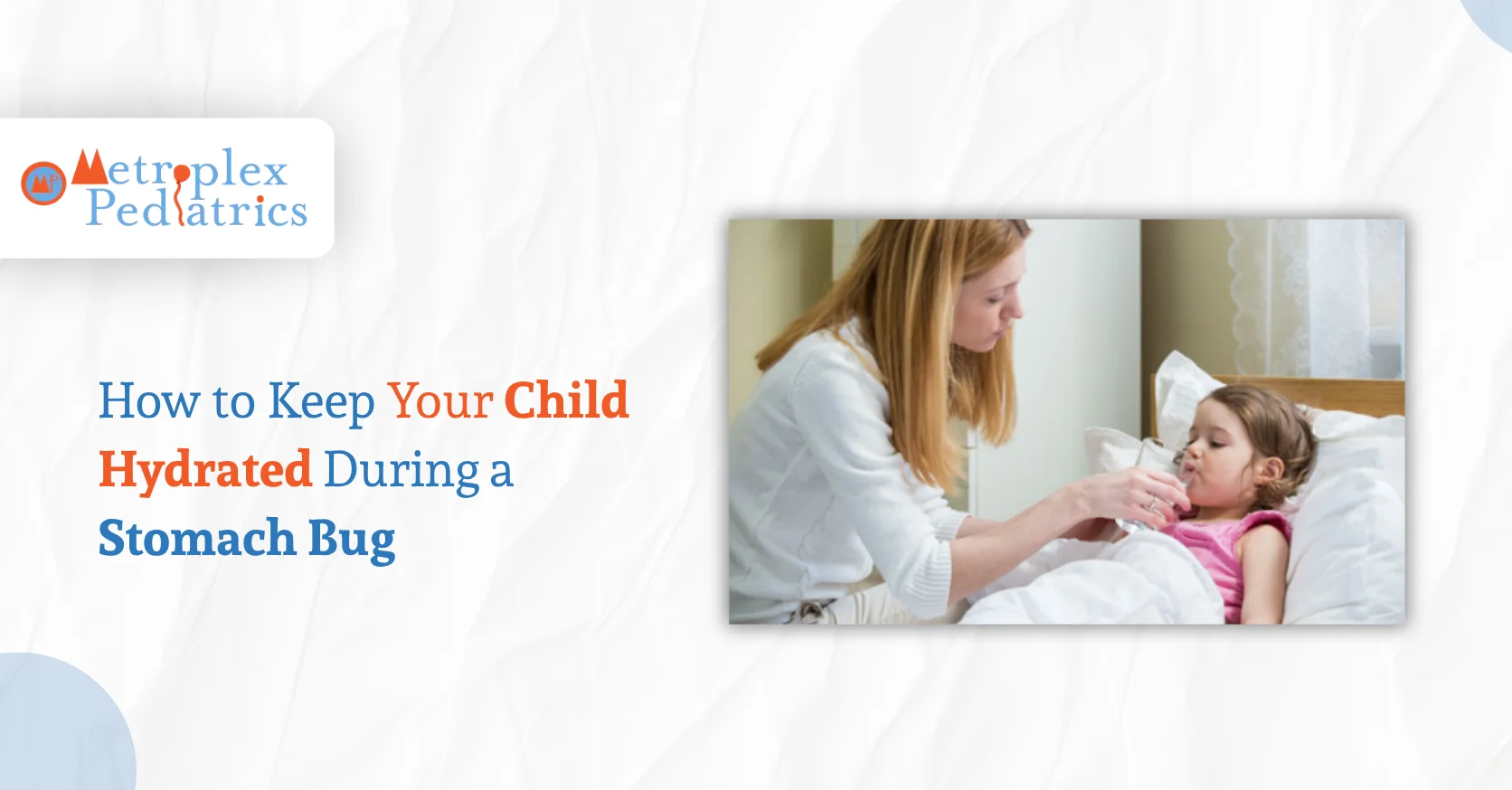
It’s late at night, your kid just threw up for the third time, and you’re standing in the kitchen trying to remember if Pedialyte or water is the right call.
Stomach bugs are one of the most common reasons parents end up Googling at odd hours. The illness itself usually isn’t the scary part. Dehydration is.
Here’s the thing most parents don’t realize until they’re in the middle of it: kids get dehydrated a lot faster than adults do.
The highest priority during a stomach bug is ensuring fluids are administered and kept down. Keeping fluids down can sometimes be the hardest part.
Vomiting and diarrhea are terrible, but if fluids are kept down, progress is being made toward improving the situation.
Why Hydration Is the Real Priority During a Stomach Bug
Typical stomach bugs, also known as acute gastroenteritis, are usually viral and caused by bugs like norovirus or rotavirus.
Each case lasts anywhere from 1 to 7 days. There is no magic pill or drug to get the kids better quickly, so in the meantime, the best thing you can do is make sure they are getting plenty of fluids and helping their bodies to fight off the bug.
This isn’t just a comfort issue. Clinicians who treat kids with gastroenteritis treat dehydration risk as the main thing to watch for from the very first assessment, because untreated fluid loss can escalate quickly in small children. The good news: oral rehydration — just getting the right fluids in by mouth, in the right amounts — has cut child deaths from dehydration by half worldwide over the last few decades. That’s a low-tech fix with a huge track record.
Spotting Dehydration Before It Gets Serious
You don’t need a medical degree to catch this early. A few signs tend to show up before things get bad, and a few signs mean it’s time to stop waiting and get help.
| Mild (Keep Managing at Home) | Moderate to Severe (Call Your Doctor or Seek Care) |
| Slightly dry lips or mouth | Dry, sticky mouth with little to no saliva |
| Mild thirst, still playful between episodes | Lethargic, unusually irritable, or hard to wake |
| Normal or slightly reduced urination | Fewer wet diapers or no urination for 6–8 hours |
| Tears present when crying | No tears when crying |
| Skin bounces back normally when gently pinched | Skin stays tented or “doughy” when pinched |
| — | Sunken eyes or a sunken soft spot (in babies under 18 months) |
| — | Rapid breathing or unusually fast heartbeat |
The three signs clinicians actually trust the most when checking a child for dehydration are an abnormal breathing pattern, how quickly the skin bounces back after a gentle pinch, and how long it takes for color to return to a fingernail bed after you press on it. If you’re ever unsure which column your child falls into, call your pediatrician’s office and describe exactly what you’re seeing. That’s what they’re there for.
The Best Fluids to Offer – and What to Skip
Not all liquids are created equal here, and this trips up a lot of well-meaning parents.
| Offer This | Skip This |
| Oral rehydration solution (Pedialyte, Enfalyte, or a store-brand equivalent) | Apple juice and other sweet juices – they can actually make diarrhea worse |
| Breast milk, continued as normal | Soda, sports drinks, and fruit punches – too much sugar, wrong electrolyte balance for a sick child |
| Small sips of water (fine for kids over 1, not a stand-alone fix for infants) | Plain water alone for infants – it doesn’t have enough sodium for their needs |
| ORS popsicles for kids old enough for solids | Broths and teas – not enough of the right electrolytes |
An oral rehydration solution has the right ratio of water, sugar, and salt for a sick kid’s body to actually absorb – that’s the whole point of it, and it’s why pediatricians reach for it over homemade mixes or sports drinks. One quick but important note: don’t water it down and don’t mix it into formula. Diluting it throws off the ratio that makes it work in the first place.
How Much, How Often: Keep It Small and Steady
This is the part that saves parents a lot of frustration. Big gulps tend to come right back up. Tiny, frequent sips tend to stay down.
- During active vomiting: start with about a teaspoon (5 mL) of ORS every 5 to 10 minutes, even if that feels absurdly small. Use a spoon or oral syringe if your child won’t sip from a cup.
- As vomiting slows down: gradually increase the amount, maybe an ounce every 30 to 60 minutes, as long as it’s staying down.
- For diarrhea without much vomiting: offer fluids more freely, and aim for roughly double their usual fluid intake for the day.
- Breastfed infants: keep nursing, just more often and in shorter stretches. Don’t stop breastfeeding to “rest the stomach” – that’s outdated advice.
- Formula-fed infants: some doctors suggest alternating formula with ORS for the first 12 to 24 hours; others say stick with formula as tolerated. This is genuinely worth a quick call to your pediatrician, since it varies by age and how sick your baby is.
ORS shouldn’t be the only thing your child drinks for more than about 6 hours without a doctor weighing in — it’s meant to bridge the roughest stretch, not become the whole diet.
What About the BRAT Diet?
If you grew up hearing “bananas, rice, applesauce, toast” as the go-to sick-kid menu, here’s an update worth knowing: that advice has changed. The American Academy of Pediatrics no longer recommends the BRAT diet. It’s too low in protein, fat, and fiber to actually help a child’s gut recover, and some pediatricians think it may drag symptoms out longer rather than shortening them.
Current guidance points toward getting kids back to their normal, age-appropriate diet within about 24 hours of getting sick — a real mix of fruits, vegetables, protein, yogurt, and carbs, not just bland starches. If your child genuinely only wants toast and crackers for a day, that’s not a problem. Just don’t feel like you need to restrict them to it.
When to Call the Pediatrician vs. When to Head to the ER
Most stomach bugs resolve at home with nothing more than fluids and patience. But a few situations call for more than a wait-and-see approach.
Call your pediatrician if your child:
- Is younger than 6 months old
- Has diarrhea that’s severe or lasting more than a few days
- Keeps vomiting and can’t hold anything down, including small sips
- Is urinating noticeably less than usual
- Has significant belly pain
- Has diarrhea with blood or mucus in it
Head to the ER or call 911 if your child:
- Seems unusually lethargic, limp, or difficult to wake
- Has gone 8 or more hours without urinating
- Has a sunken soft spot (infants) or sunken eyes
- Is breathing rapidly or has a racing heartbeat
- Shows pale, mottled, or cold skin
- Has any signs of severe dehydration combined with confusion or unresponsiveness
When in doubt, it costs nothing to call. Pediatric offices field these calls constantly, and a quick phone triage can save you an unnecessary ER trip — or catch something that genuinely needs one.
A Few Things That Actually Help
- Keep an oral syringe or small spoon on hand — it’s easier to control tiny sips than trying to get a toddler to sip from a cup
- Offer ORS popsicles for kids over 1; they’re often easier to get down than liquid
- Don’t force food during active vomiting — focus on fluids first, food follows once vomiting settles
- Wash hands frequently and disinfect surfaces — most stomach bugs are highly contagious, and keeping siblings healthy matters too
- Trust your gut. You know your child’s normal. If something feels off, that instinct is worth listening to
When You’re Not Sure, We’re Here
Stomach bugs are exhausting for everyone in the house, and it’s completely normal to feel unsure about what’s fine to ride out versus what needs a professional look. That’s exactly what your pediatrician’s office is for. If your child is showing any signs of dehydration, or you just want a second opinion before another sleepless night, the team at Metroplex Pediatrics is ready to help — reach out and let’s get your little one back to themselves.




No comment